
2025 Study Tour
Bruce Zoecklein, Enology Professor Emeritus, Virginia Tech
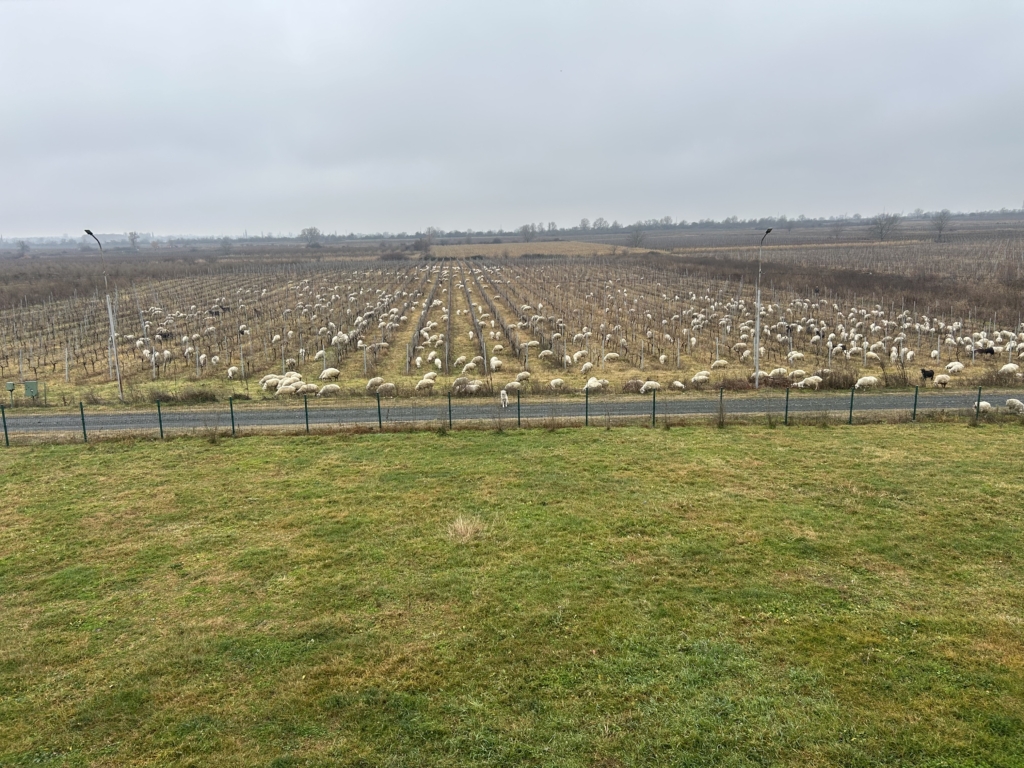
These terrific Georgians had the fierce gaiety of the Italians and the physical energy of the Burgundians. Everything they did was done with flair…. nothing can break the individuality of their spirit.
John Steinbeck, A Russian Journal, 1948
For several years, a French colleague and I have taken professional winegrowers from various parts of the country on technical study tours to wine regions in Europe. In December of 2025, we lead a group of 14 from Virginia and the mid-west to Georgia. Wine is integral to the culture of Georgia, a small country whose history is a succession of struggles for independence. Throughout these toils, Georgia has retained a strong identity, including its own language, customs, Christian religion, and a national reverence for wine, which has endured for over 5,000 years.
Virtually every producer we met stated they used natural winemaking. The drive toward minimal or non-interventionism in the West was the result of a growing discontent with fruit-forward styles that die young and global wines that are, at times, hard to tell apart. Additionally, dissatisfaction with wine sameness and suspicion of winemaker honesty regarding additives created the movement. Natural winemaking is an interesting term that has no recognized definition or standard. After all, wine taken to its natural end state is vinegar. Georgian winemakers expressed a common philosophy regarding their natural winemaking:
Non-interventionism. Very minimalistic winemaking with generally no additives, including yeast, although one producer sprayed his vineyard with yeast.
- Environmentalism. Awareness of the detriments of petrochemicals, erosion, deforestation, and farming to minimize negative impacts.
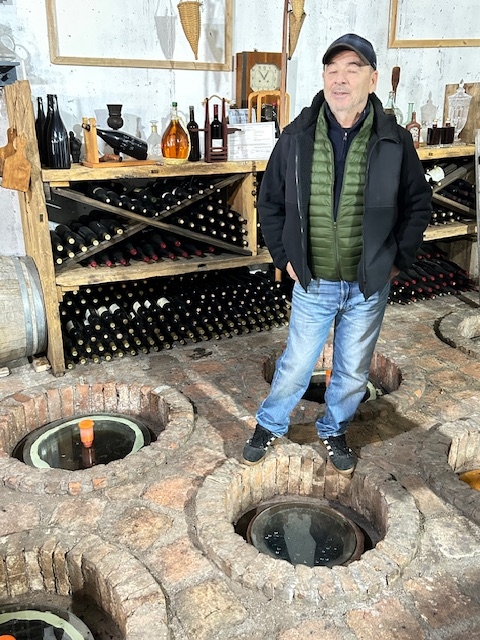
- Traditionalism. A strong interest in preserving traditional wine culture, which includes qvevri fermentation and storage. Even though some larger producers see the merits of Western winemaking equipment and strategies, most still use the traditional methods for at least some of their production.
Cultivars. Both natural and artificial selection have given rise to more than 500 identifiable indigenous grape varieties, including Vitus vinifera silvestris. Thirty-eight grape varieties are commonly used for commercial viticulture, a few of which we know, including Saperavi and Rkatsiteli, the two most widely planted varieties. We tasted a kaleidoscope of different varietals, most little known in the West. Many producers mix varieties, often in field blends, in part because yields are quite variable, as are vintages. Their blending was dependent upon availability and reminded me that it may be that wines vary more by viticultural regions than by cultivar.
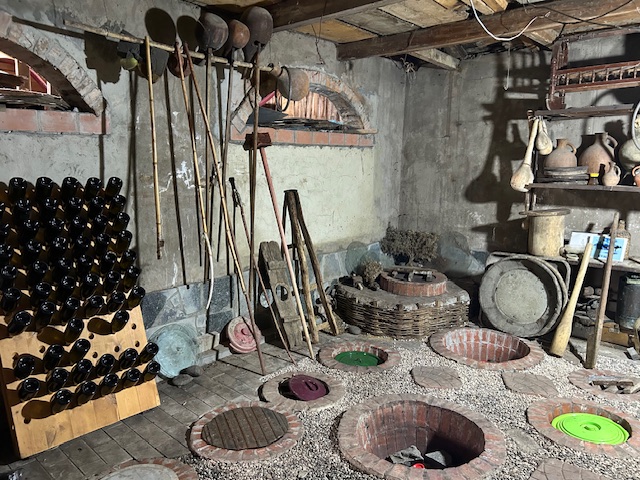
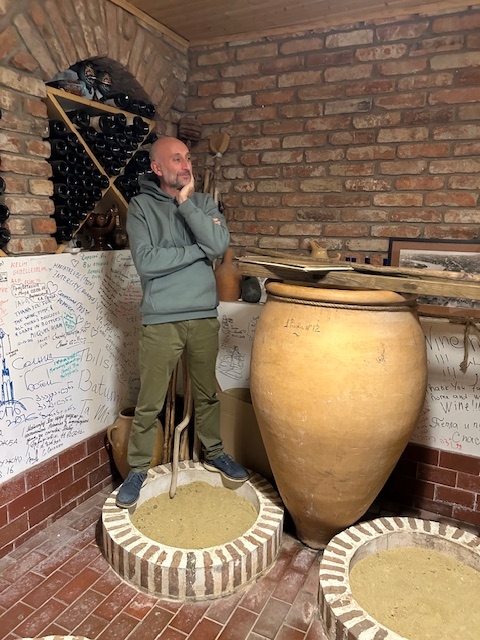
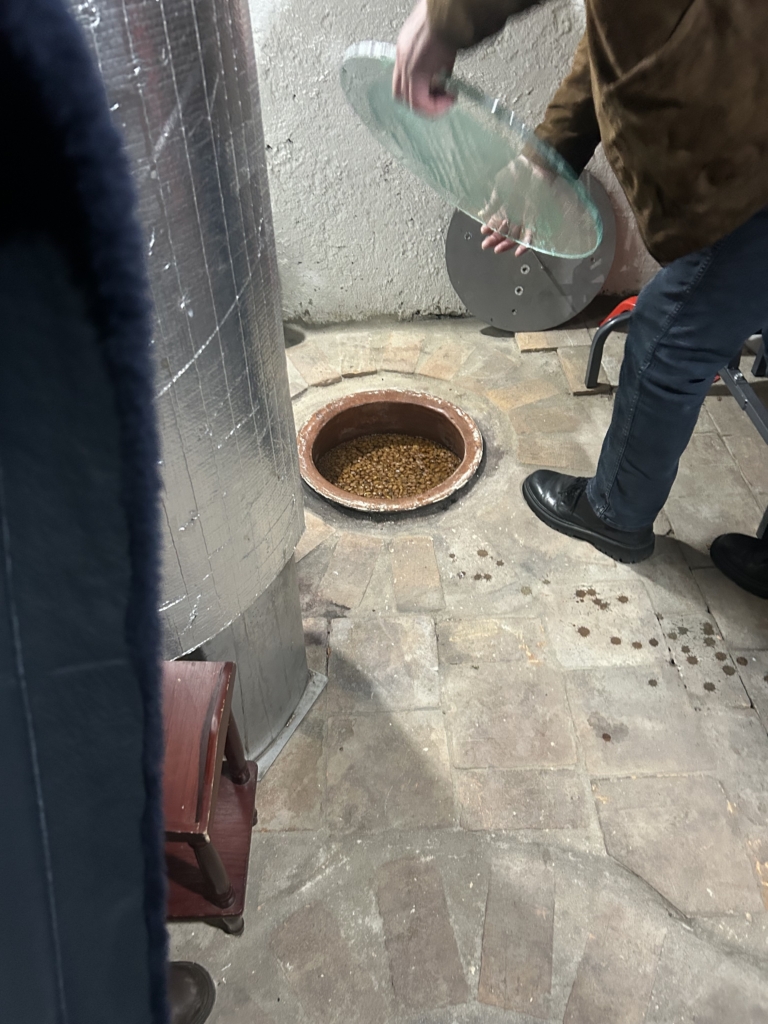
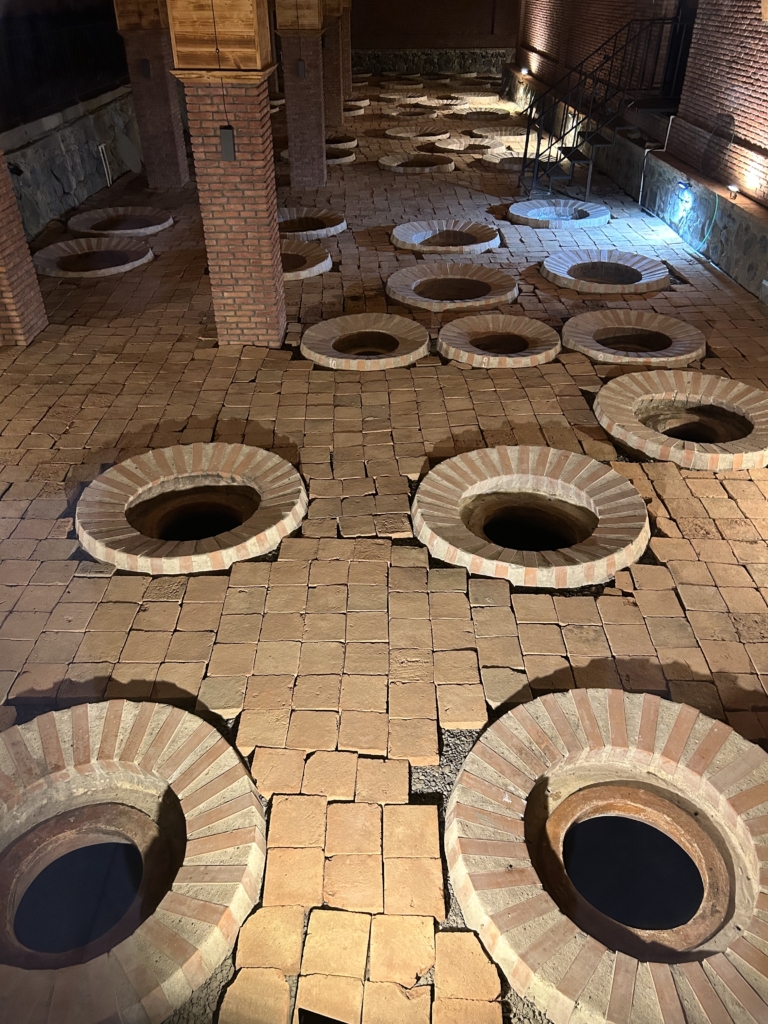
Orange/Amber Wine Production. While Georgians prefer the term amber wines, in America, their traditional wines are often referred to as orange wines. Time-honored Georgia winemaking is thought of as fermentation and extended maturation in qvevri. These clay vessels are synonymous with Georgina wines, although their use varies significantly. Production techniques and, if, how and when qvevri are used depend on a host of variables, including region, cultivars, and stylistic preferences of the producer.
If made according to the old customs, grape bunches are foot-trodden, and the juice is run into a qvevri. After pressing, the stems, skins, and seeds are added to the qvrevri for alcoholic fermentation conducted by native yeast. The percentage of stems depends on the region, style, the harvest, and stem maturation. Once the fermentation is completed, the qvevri will be covered and left in the ground until March or April. In the spring, the wine is separated from the solids and may be placed into another qvevri for additional aging. This extended maceration is referred to as the Kakhetian technique, named for the most important region with a relatively high clay content and one of the three we visited. We tasted Amber wines produced in this way from Rkatsiteli that had delightful aromas of apricots, orange peel, and nuts.
In another region visited, Imereti, the qvevri is called a churi. Here, while the traditional method involves some contact with skin and stems, there are far fewer stems due to a lack of stem maturity. Wines are lighter and do not spend as much time in contact with solids as in the Kakheti or eastern region, only during alcoholic fermentation.
Not only are there winemaking variations, but there are also a host of interesting qvevri variables, which may include:
- Mineral content of the clay
- Variation in the components mixed with the clay, including limestone and river sand
- The temperature when the clay dries and sets
- Kiln temperature
- Wax lining (or not)
- Lime/cement exterior
- Size, shape, and style
We had the opportunity to visit a master qvevri producer and learn about some of these factors. Naturally, an important question is whether these vessels contribute to wine quality. And if so, how and why? The answer seemed to depend on who was asked.
Several stated they believe that the clay is as inert as a stainless tank. The difference being that the mineral composition of the clay does not interfere with the electrostatic process, facilitating tannin polymerization, unlike stainless-steel. Others maintained that given the porosity, a qvevri, unlined inside and out allows for more micro-oxygenation than either a stainless-steel tank or even a barrel. This may be true, however, everyone we visited waxed their vessels, however at varying frequencies.
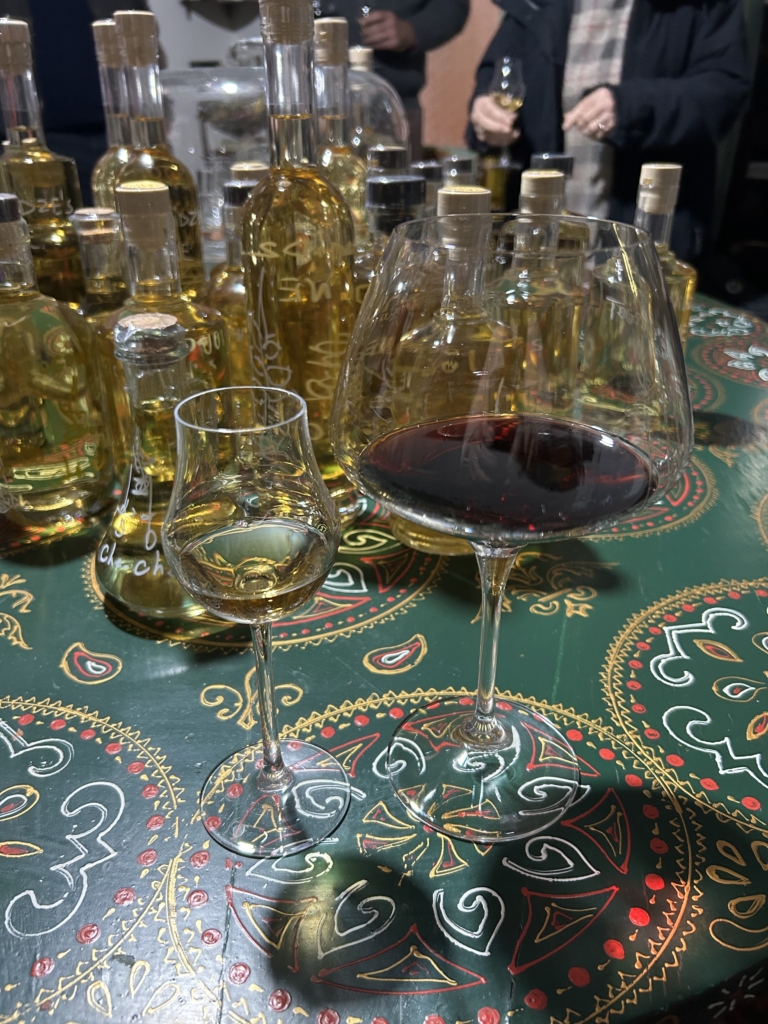
Is there a qvevri character? There can be a distinctive taste from the clay, possibly increasing what might be described as minerality. Wines made in clay vessels are often higher in acetic acid and lactic acid, possibly do the processing methods rather than the qverri itself. However, it is certainly not wasted. Each producer had a still, a necessity for recovering from those unbalanced wines, high volatile acidity. They call this spirit distillate ChaCha, very common throughout the country.
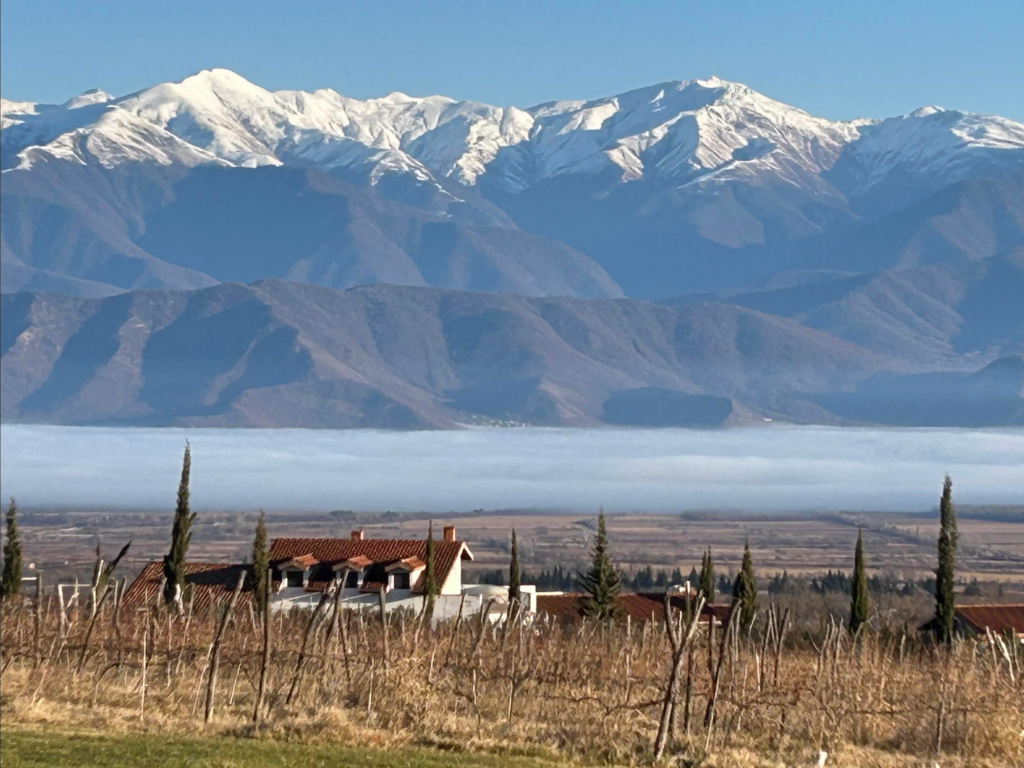
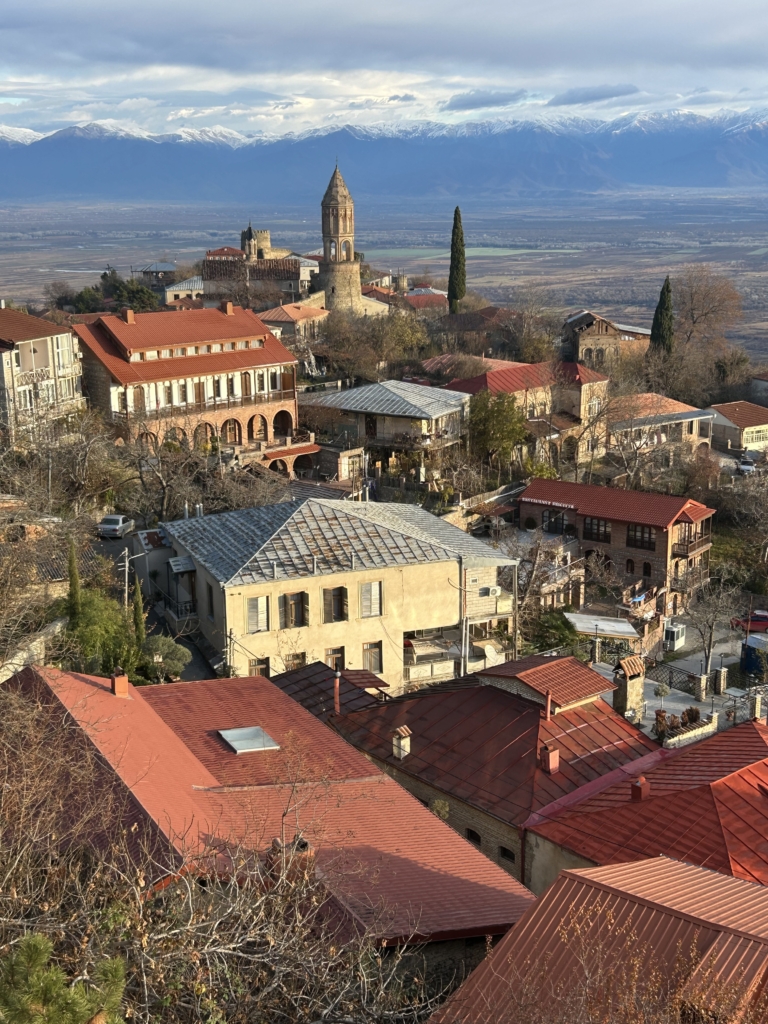
Terroir. The topography and geology of Georgia are complex. The mountains of the High Caucasus in the north account for about 30% of its total area and serve as a barrier against cold air from Siberia. The Lesser Caucasus mountains are along the southern border. The landscape creates a large diversity in the country’s soil and climate conditions, which in turn influence grape culture.
Limestone and calcareous rock underlay a great deal of the vineyards. The understanding of terroir features has been complicated due to several factors. Traditionally, many vineyards were operated by country folks with little interest in soil types, textures, and terroir in general. Unfortunately, ripping growers from their land under Stalin’s reign of terror severed a vital link regarding knowledge of family plots. Another consequence of Soviet collectives was the industrialization of agriculture and the widespread application of fertilizers to help maximize yields, which left the vineyards unbalanced. Additionally, the long-standing tradition of blending under the Soviets did not value individual site expression. The remnants of Soviet occupation are still present in the attitude towards Russia, with some expressing disdain and others showing an almost reverent attitude toward Stalin, who was born in Georgia. As recently as 2008, the Georgians fought Russia over territory, with the Russians prevailing.
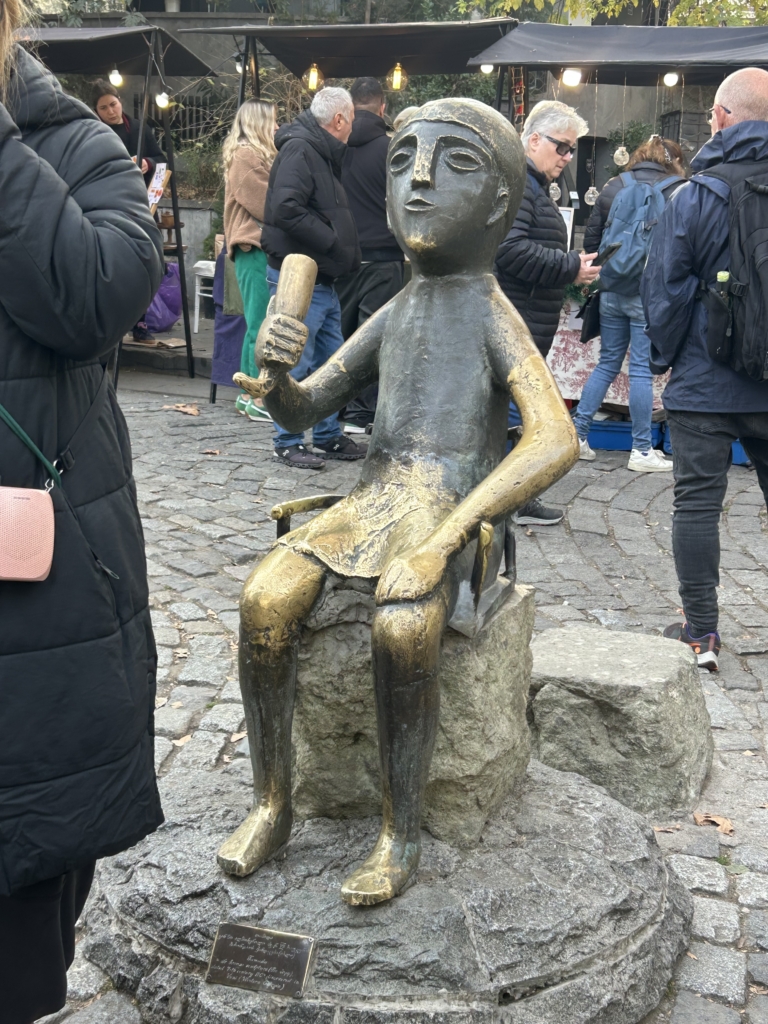
These trips encompass much more than simply winegrowing. We received a snapshot of Georgian culture, which is marked by several features. The cult of hospitality suggests that guests are considered a blessing, and we were treated as such. The centerpiece of social life is the Supa or traditional feast which for us featured an abundance of foods, always including walnuts, pomegranates and wine. Serving wine is a means of offering respect. They are religiously devoted and conservative with a proudful and admirable reverence to Mother Georgia.
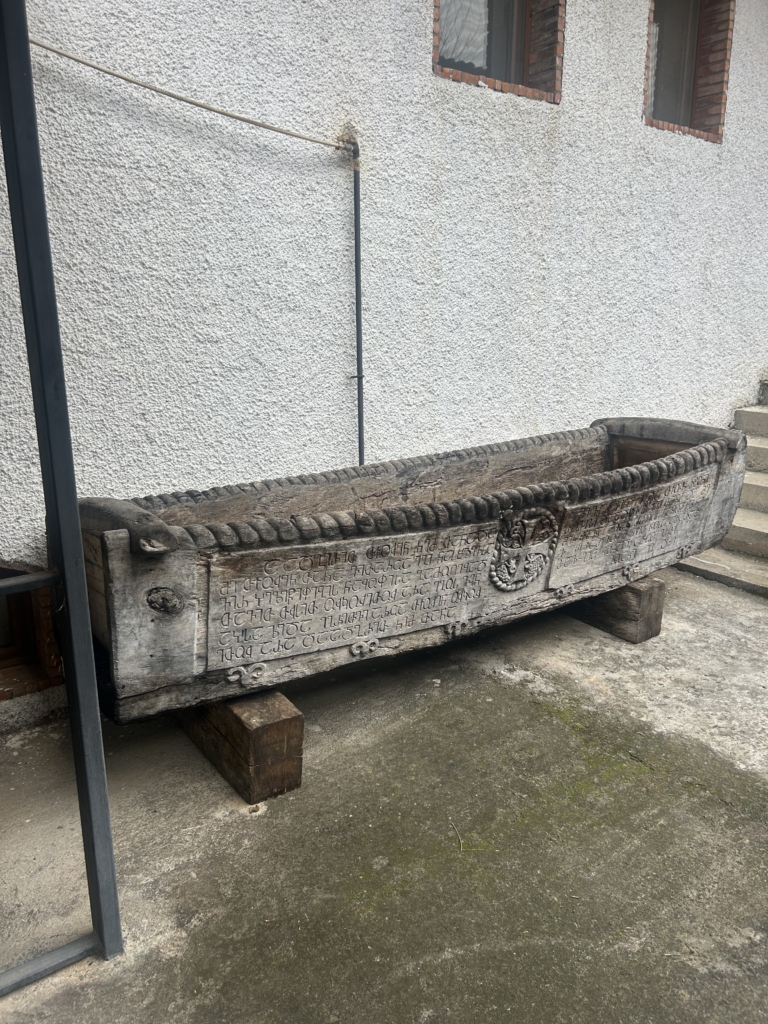
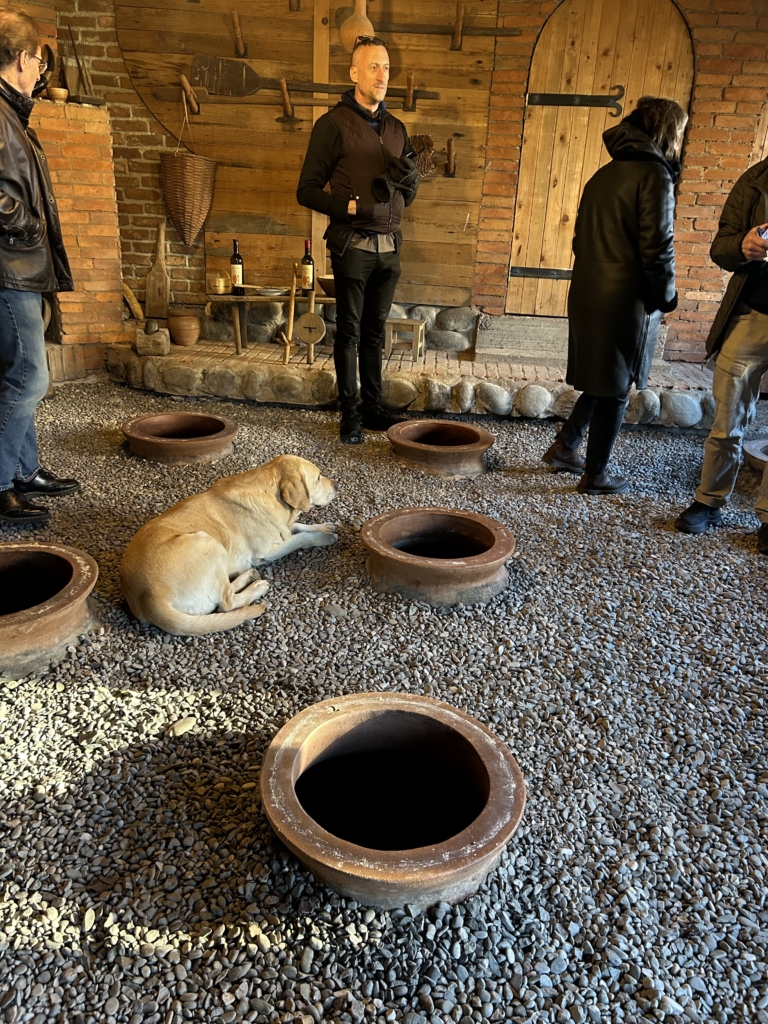
As the industry has modernized, there is greater use of international winemaking equipment and techniques on the part of some. This includes incorporating the traditional oak barrels, stainless-steel, micro-oxygenation, etc. However, maintaining the cultural inheritance of qvevri production will remain an important part of Georgian winemaking and national identity.
For information regarding past Study Tours, go to www.fst.vt.edu and click Enology, then Enology Notes. Write-ups have also been included in past editions of the Grape Press. I will announce in May the Study Tour for December, 2026.
For additional information, please contact me at bzoeckle@vt.edu
Georgia Trip Epilogue – Jess Trapeni
Joining Bruce’s trip to Georgia to study winemaking was an unforgettable experience and one I’m incredibly glad I didn’t miss. Traveling through regions like Imereti and Kakheti gave me a deeper appreciation for how regional traditions shape wine, from the bright, fresh styles of the west from varieties like Kisi to the fuller-bodied amber wines of the east made from varieties
like Rkatsiteli. Learning about the history and cultural importance of the Qvevri was especially impactful and reinforced a powerful lesson for me as a winemaker: trust the process. Beyond the technical learning, experiencing how deeply wine is woven into everyday life in Georgia made the trip truly special. I’m very grateful to Bruce, Pascal, and the entire group for such a meaningful and memorable journey. Gaumarjos!