
The regional reports for the second half of the 2025 vintage follow, these reports were compiled and edited by Jason Burrus. Thanks to all of our regional contributors for their valuable commentary on this memorable vintage!
Regional Report – Northern Virginia
Jason Burrus – 50 West Vineyards and Sunset Hills Vineyard
Vintage 2026 started out cold in Northern Virginia. While a few varieties achieved bud break by the second week of April, some hadn’t emerged by the April 21 freeze. Those that did barely reached the one-leaf stage by then. The slow emergence from dormancy was also a reflection of the advanced age of our vine, some reaching 25 years. From bud break to the time of this writing, Northern Virginia has been in moderate drought, placing stress on vines that have seen drought conditions for two of the last three years and have just come off a season with heavy Spotted Lanternfly pressure. We applied compost to all 55 acres for the third year in a row, though I had hoped for more rainfall early on to help drive it into the soil.
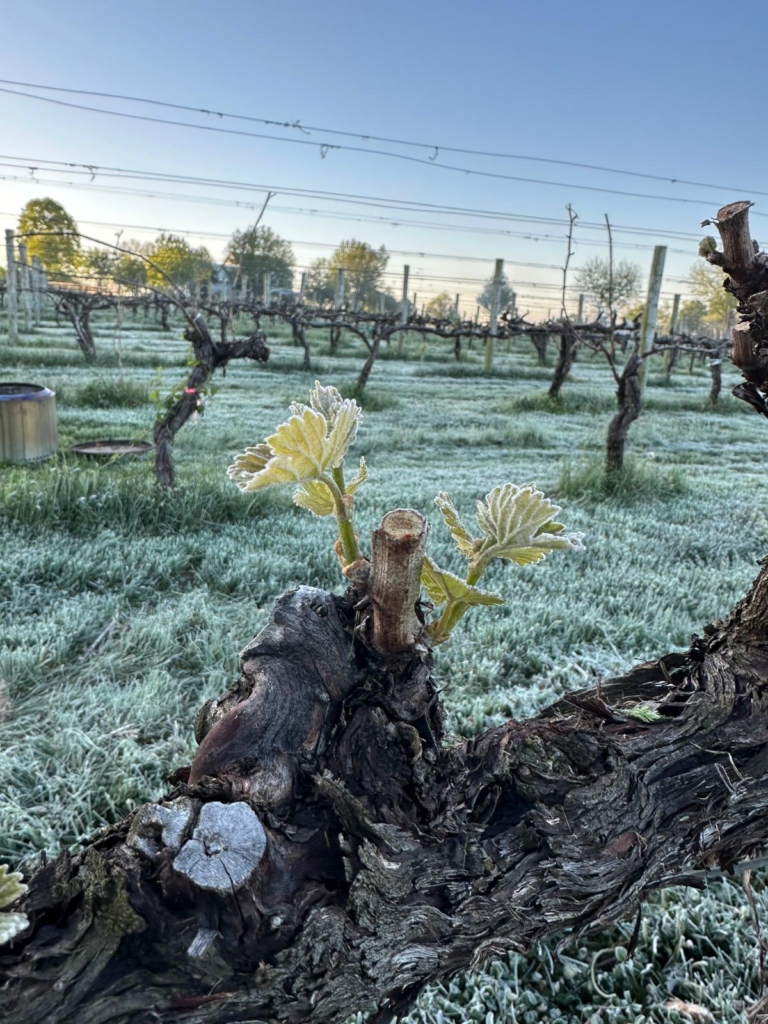
The April 21 freeze affected all 55 acres across four vineyard sites – two in the northern Shenandoah Valley and two in Loudoun County. The initial assessment was difficult due to the slow growth of the emerging shoots. The death of the strongest shoots was easy to identify. But most bud positions barely had any growth at all. Would they eventually show green growth or not? Temperatures following the freeze remained cold, preventing rapid assessment of the shoots. Tannat hadn’t achieved bud break at all. I had hopes there would be no damage on those shoots. But conventional wisdom about frost damage didn’t apply here. The freeze delivered 24°-27° F at every elevation in the vineyards, including those in the Shenandoah Valley where the elevation surpasses 1,000 feet. Tannat experienced almost 100% loss even though no bud break occurred. We lit bonfires, and those vines close to the heat suffered the least amount of damage. We concentrated the fires on the early bud break varieties, thinking those that emerged later (and had the least amount of shoot growth) would be spared the brunt of the damage. That turned out to not be true, with Petit Verdot and Tannat seeing as much or more damage than other varieties. Later assessment several weeks after the freeze revealed Cabernet Sauvignon suffered the least amount of damage while Tannat and Viognier had the most.
Delay wasn’t limited to vine growth this season. 70% of our vineyard crew works via an H-2A visa, and every worker was delayed by at least a month (with one delayed two months). VAGA (Virginia Agricultural Growers Association) says this was widespread among vineyard workers due to delays in visa processing by the Department of State. H-2A workers also saw a rare and substantial (27%) reduction in the wage floor, from $16.16/hour in 2025 to $11.82/hour this year, though I hear many vineyards are paying more than the floor wage. Due to lower wages, late arrival, and the lack of vineyard work, vineyard expenses early in the season have been substantially reduced.
As of the fourth week of June, vine growth has accelerated, and shoot length is approaching hedging length. Summer thunderstorms have started, and rain events are increasing, though the amount of rain is low. We have been irrigating and hand-watering our vineyards for the last several weeks, and drought is certainly the limiting factor in vine growth now. One curious observation at this point in the season is that those shoots not damaged in the April freeze set a crop in the same time frame as in previous years. Even though shoot growth was slow, fruit set and berry growth are similar to other seasons. Flowering, fruit set, and berry growth seem advanced compared to overall shoot growth.
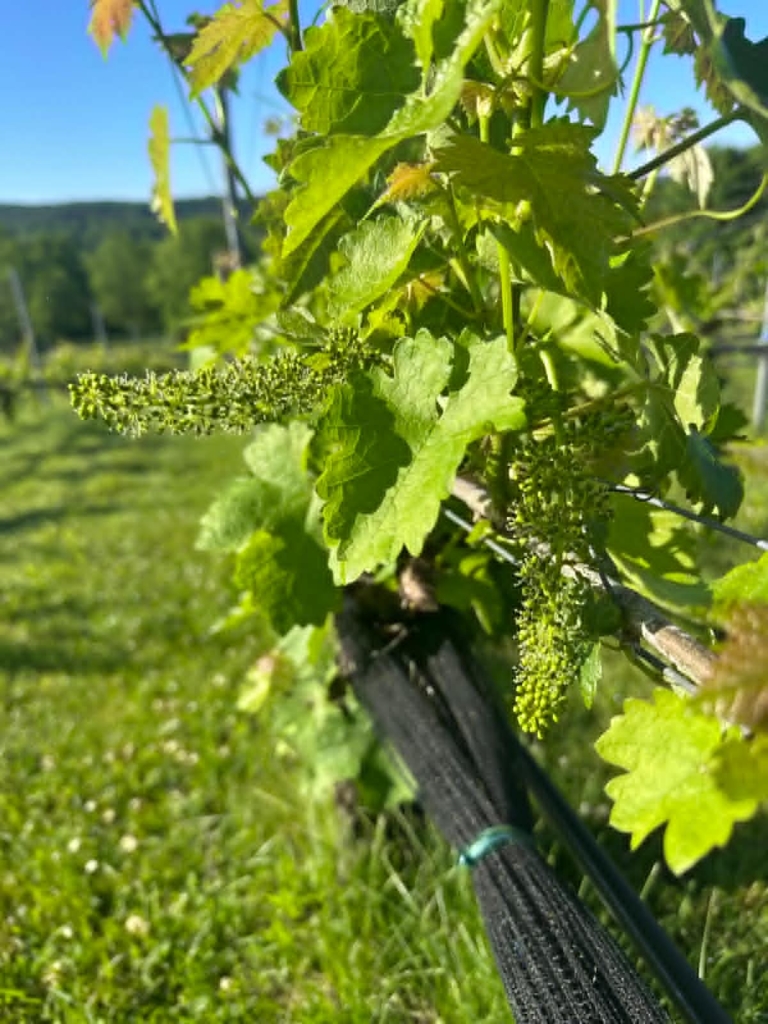
SLF (Spotted Lanternfly) pressure began strong in May but has subsided recently. This may be due to natural factors, my willingness to spray insecticide early as a result of last year’s SLF pressure, or a combination of the two. In any event, I expect another season of heavy SLF pressure. I also expect the compounding effects of drought and SLF pressure to have serious implications for long-term vine health. In my consulting work in Central/Western Maryland, I’ve seen SLF pressure subside in recent years, presumably through predation. SLF pressure there was highest in 2023 and 2024. It seems that as SLF spreads south, so too does an eventual reduction in SLF pressure in the following seasons. Let’s hope 2026 sees the beginning of the end for SLF infestation in Northern Virginia.
Regional Report – Central Virginia
Benoit Pineau – Pollak Vineyards
Climate
Winter
During the months of February and March, the winter was memorably cold, with a one-of-a-kind ice storm that set a six inch thick layer of ice. The temperature came down to 4° F at Pollak Vineyards. Unlike January and February, the month of March was unusually warmer.
Spring
Following the warm March, the temperature declined to be cooler than the seasonal norm. In regard to precipitation, for the third year in a row, the Spring was very dry.
Are we starting a new trend ?
In the last few years, it has become common for the vineyard staff to become stressed with the arrival of the Spring and the potential frost events. This year sets records. We had to navigate three frost events – April 8, 9 and the killer April 21 freeze.
Physiological stage and related work
The extremely low winter temperatures had life-damaging consequences to some older cordon pruned vineyards in the Monticello area; arms and/or trunks split in these cases.
At first glance, we were hoping for a delayed budbreak from the cold winter temperatures. Instead, budbreak was one of our earliest recorded and happened March 23rd, 2026.
Can the layer of ice act as an insulator and increase soil temperature ? Of course, the warmer than usual March didn’t help to hold the buds tight.
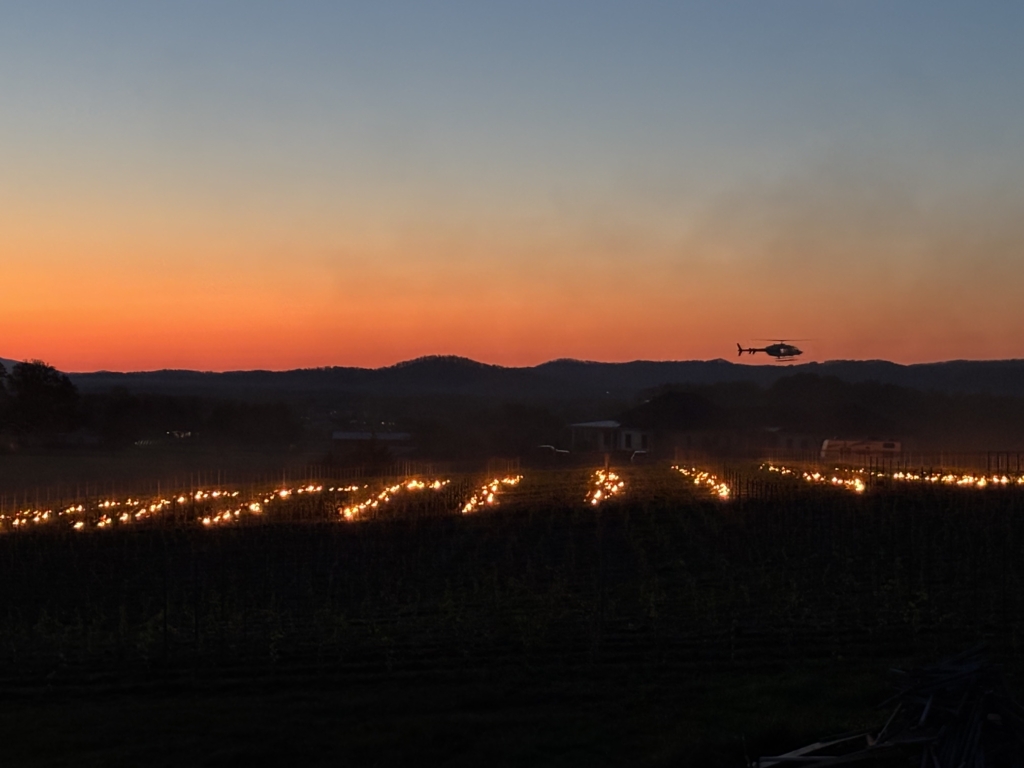
On April 21st 2026, the Spring frost was in fact a severe Spring freeze. Our Pollak Vineyards site was affected, while our Windcrest site was untouched. The Western part of the Monticello AVA was safe only above 880 feet. Concerning our main site, the temperatures dipped under 32° F from 2:00 am to reach 27° F. We were able to protect most of the crop by burning candles; our frost-prone Nebbiolo crop was saved by the candles (see picture).
Neighboring vineyards with frost fans under 880 feet were not as fortunate. The upper ambient air was too cold to protect the vines during this event. Our unprotected varieties (Pinot Gris, Sauvignon Blanc, Viognier) suffered the cold to a greater extent. It’s common to observe the entire cane vascular system dead, no secondary nor tertiary bud push. It took a long time for the affected vines to bounce back due to cooler temperatures and lack of water. In some rare cases, the vine will not make it back. The cold temperatures also had a damaging effect (sometimes reaching mortality) on young vineyards (less than 3 years old) , particularly the most vigorous ones. Navigating between the cold frosts and the drought, Spring 2026 was certainly not an ideal planting year.
Today, at the end of June, most of the affected vines are very bushy from the trunk base to the head. It requires trained staff to manage the canopy; vigor balance and next year’s cane position are our priority goals.
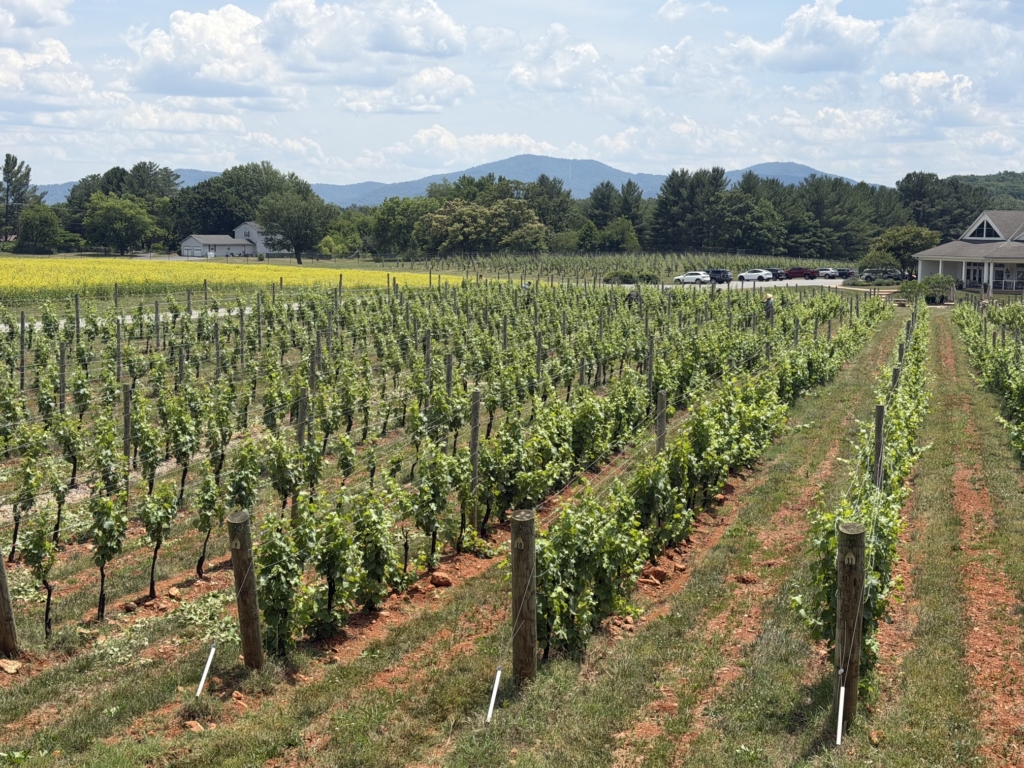
Thinking positively, in these difficult times:
- We are trying to use this devastating event as an opportunity to renew trunks for older vineyards and get rid of fungal diseases like botryosphaeria.
- The slow growth resulted in short internodes, more shoots and potential fruit for next year.
Despite some (welcome) rain events around flowering time, the fruit set is good. The only place where flowering didn’t set good fruit is in overly vigorous vines, especially in Sauvignon Blanc and Petit Verdot.
Fungal-Viral Pressure
As difficult as the season has started, the fungal pressure was low. Thanks to the dry conditions. At least up to the second week of June; then, Black Rot (leaf symptoms) appeared abundantly in all varieties except Viognier.
Is Viognier more resistant to Black Rot ?
This Black Rot infection may have been particular to us, over-wintering from last year’s strong sporulation.
Insect Pressure
It has been a few years since the cutworms have been an issue. This correlates with the dry Spring trends. The dry conditions make it difficult for them to get out of the ground.
We are all worried about the 2026 Spotted Lanternfly population, and secretly hope that the extremely low winter temperatures have had a devastating effect on the egg masses. From our first observation, it didn’t. The Spring nymph population was extremely high, particularly at our Windcrest site. The majority of the vines’ leaves were shiny from their honeydew. With all respect to the state advisory entomologist, we had to apply insecticide (Carbaryl) to decrease the population and protect our and the neighboring vineyards/orchards. It is worth noting the absence of nymphs in our 12-acre mustard field (established in preparation for next year’s planting).
Today, at the end of June, we are monitoring the arrival of the Japanese Beetles and remain hopeful that the dry ground will play in our favor.
Regional Report – Shenandoah Valley
John Kiers – Ox-Eye Vineyards
At Ox-Eye Vineyards in Swoope, the warm late March temperatures approaching 90° F set us up for being super-vulnerable to the mid-April freeze. Our estimated crop loss is about 60 to 70% at elevations below 1,750 feet and 30% at heights above 1,750 feet. The recovery of the vine has been extremely slow due to the drought. This past winter was very dry, and the spring was no better. We have had only one significant (1.25″) rain event in the past 60 days, and it occurred in the third week of June. That bit of rain helped the vines continue to push out more replacement buds. We are spending most of our time in the vineyard retraining shoots from the bottom of the vine and leaf pulling where we have some fruit.
It is interesting to note that the last time we had a spring freeze was 2002, which also turned out to be a very dry year. The fruit we do have should be of high quality, mostly due to dry conditions and very light fruit load.
At another vineyard about 10 miles south of us, at an elevation of 2,200, they had no frost or freeze.
From Lee Hartman of Blue Stone Vineyards in Bridgewater: In the world of Virginia Wine, I tell people all the time, “there’s no such thing as normal.” And 2026 has lived up to that. After a cold winter, covered in ice and nearing zero in temperature, things warmed up in March, and things began opening up in April. Like much of the state, we were hit by a hard freeze on April 21, getting down to 25 degrees in some of our vineyards. Many of our neighbors have reported devastating losses, wondering how much work they want to put into the vineyard this year with what is left.
If there was any good news for us in this event, it came from the strangest of places. Our H-2A team, in their fourth year at Bluestone, were delayed at the border for a full month before they had their visas approved. This put our pruning way behind schedule, even though we like to delay final pruning for years exactly like this. While buds were out in almost every block, many did not have buds open everywhere on the cordon, meaning we could make strategic cuts until we finished in May. We certainly did not escape unscathed, and some blocks look better than others. Cabernet Franc and Merlot are looking pretty good, while Muscat and Chardonnay do not. Vidal? Let me know if you want to buy any! Putting a percentage on loss is difficult, but it likely ranges from 70% to less than 10% depending on the block’s varietal and location.
After April 21, the weirdness of weather has continued with drought conditions and then half a foot of rain in one week, right in the middle of it. After leaving extra buds to mitigate losses, that means we’ve had to thin the cordon continuously, and leaf removal still hasn’t been completed everywhere. On one plant, we may find bloom and beyond pea berry on neighboring shoots. We will make wine this year, but no such thing as normal.
Regional Report – Southern Region
Kevin Sutherland – Nicewonder Farm & Vineyards
The spring of 2026 will be written into the history books as one of the most grueling. At Nicewonder Vineyards, the season has been defined by a relentless series of climate challenges—ranging from a devastating multi-wave frost sequence to an intensifying regional drought.
The Frost Front: Four Major Cold Events
The headline of the 2026 spring budget is our ongoing war with late-season frost. While a warm early spring coaxed out early budbreak, the weather turned violently cold on April 21st. At this critical juncture, our vines were vulnerable, sitting at growth stages E-L 6 to 10 (first separated leaves to early inflorescence emerged).
To combat a deep radiational frost, we deployed a helicopter to fly the vineyard, attempting to pull down warmer air from the inversion layer. The internal topography at Nicewonder told a stark story: temperatures bottomed out at 29° F in our lowest blocks, while our best-performing, higher-elevation blocks held at a safer 35° F. Thanks to the extremely low dew points, we escaped this first devastating event with remarkably minimal damage—around 10% on our highly susceptible Chardonnay.
A Note on Our Community: While we were fortunate, many of our peers across the commonwealth received a catastrophic blow during the April 21st freeze. Vineyards in Northern Virginia: having experienced the heartbreak of severe crop loss in seasons past, our hearts truly go out to our fellow Virginia growers as they navigate this difficult recovery.
Following the April 21st “gut punch,” regional temperatures remained unseasonably cold, and vine growth completely stalled. This prolonged stagnation exposed us to three subsequent freeze events:
- May 3rd- Fly
- May 8th- Did not Fly
- May 15th- Closer than we thought, should have flown.
Our Chardonnay block took a second hit on May 3rd, bringing cumulative damage for that variety to around 30%. Fortunately, the remainder of the vineyard weathered the storm beautifully and remains in good, healthy condition.
An Intensifying Drought and Late-May Relief
Compounding the intense frost pressure, our region plunged into a severe drought for the majority of the season so far. The lack of rainfall threatened to slow down the natural push of the vines and put immense pressure on our newest investments.
Fortunately, our infrastructure includes an irrigation system. Without the ability to apply water, our newly planted Petit Verdot “baby” vines would have been in serious jeopardy. Thanks to targeted drip irrigation, the young plants were kept stable despite the parched soils.
Just as the dust was settling from the mid-May freezes, nature finally provided some respite. At the very end of May, we received some much-needed rain. This rain event was a massive lifeline, giving the entire vineyard—from the established blocks to the vulnerable young replants—a vital shot of natural hydration that no irrigation system can perfectly replicate.
Vineyard Restructuring: Phasing Out Merlot
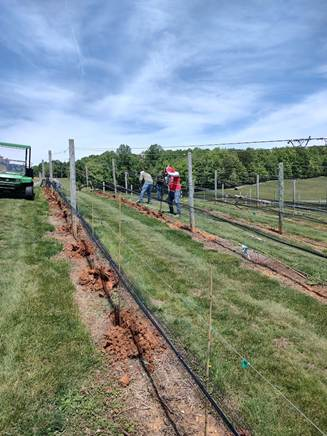
The severe spring weather has reinforced the necessity of matching the right varietals to our unique Appalachian climate. This spring, we officially began the process of replacing our 3-acre block of Merlot. In recent years, this specific block has required continual, exhausting vine replacement due to recurring winter injury and cold spring damage.
To build a more resilient future, we have removed the first 1 acre of Merlot and replanted it with Petit Verdot—a more cold hardy, robust, thick-skinned variety that has repeatedly proven its “bulletproof” nature against volatile Virginia weather. Our development plan over the next several years includes removing the remaining 2 acres of Merlot and replacing them with a variety or varieties better suited to handle our extreme winter and spring temperature swings.
Current Vineyard Operations
Because the freezing temperatures stalled development, our vineyard schedule is currently running slightly behind its usual pace. However, catalyzed by the late-May rains and stabilizing temperatures, growth is finally accelerating, and we are now behind! The vineyard crew is now out in full force, actively managing the canopy through shoot thinning and cane positioning.
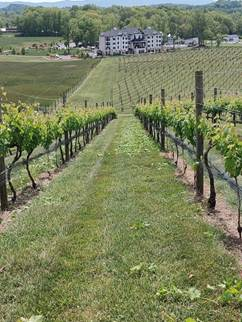
The 2026 vintage has already tested our resolve; we are ready for what the rest of the growing season brings.
Eastern Virginia Regional Report
Gonzalo Ortiz – Rustic Vintage
Here in the beautiful Northern Neck of Virginia, the winter and spring were abnormally cold and dry. The first part of the growing season has been cool and dry, with that pattern just breaking with timely rainfall and sustained warmth.
Winter pruning was uneventful with good pruning material available among all the planted varieties. Thankfully, last year’s lack of rain and the uncharacteristic sustained cold temperatures of the winter did not result in dry canes or weakened vines. With the help of my father, Uncle George, and my sister, our producing vines were cane pruned and tied in time for bud burst. This winter is the first time I routinely used an electric pruner. I had used one on and off in the late nineties early / two thousands but I did not trust that generation of electric pruners with my fingers. The one I purchased has shown to have been a dramatic good purchase for my tendons, and I trust the grounding sensor when my free hand comes close to the blade.
January had 5 days with temperatures under 15° F, and February had one day at and one day under 15° F, which aid in keeping Pierce’s Disease in check. March had five days above 80° F and five days between 75° F and 80° F, which set up for an earlier bud break and earlier vine activity.
By April 3rd, 50% of our Chardonnay had bud break. By April 8, 25% of Chardonnay buds had 3 separated leaves, and Petit Verdot was pushing buds. The night of April 8th, we had a light frost that affected just a small portion of the Chardonnay. I heard of this frost also impact earlier than normal budding Chardonnay in North Virginia. The frost of April 21st (28°-30°F on site) knocked out most of all our vinifera. When I was a child daydreaming of owning my own farm, I would dream up my farm maps and they would be specific with clones etc. I never thought of planting hybrids because I had early success producing high-quality vinifera, but once ownership became a reality, I decided on planting 2 acres of Chambourcin just for this occasion, as their secondary buds are fruitful and this event was inevitable, so I needed something that would keep things going. Planting the Chambourcin was a good move in hindsight.
What was rough about the April 21st frost is that the vines had multiple inches of growth, which would have been depleting to carbohydrate reserves and just before the leaves started producing their own net energy on young vines. So secondary and tertiary shoots had less carbohydrate reserves due to vine age and the expended energy lost by the primary shoots having been so advanced but not advanced enough to be producing their own energy. This was in part realized because we had 8 days over 80° F from bud break up to April 21st, and it took another 5 weeks after the frost to have 8 days over 80°F. Just as negatively impactful as the lack of heat post frost was, we had less than a half inch of rain the next four weeks after the frost.
While we have been in a drought for most of the spring, it took until some well-timed rains and an increase in temperature in late May for secondary and tertiary buds to start growing. Now vines are lush, as while rain has been sparse, it has been timely as far as plant growth is concerned.
Rain has since been the biggest concern, as pest pressure has been low. It has been a while since I have seen Phomopsis, but it showed itself (very sparsely and lightly) as growth after the frost was uneven, making timing control tough. Aside from that, no powdery or downy. Happy to see no downy because overnight dew is common here, but I have been working on getting to a clean canopy. Moth pressure and, of all things, ticks, are extremely high not sure how the weather has played a part in that, but the amount of ticks I have seen this year is more than all years prior.
I have not heard complaints from regional vineyards, and I hope our regional row crop colleagues can keep going with yet another year of low moisture, high fuel cost, and fertilizer costs that have been experienced this spring.