
The regional reports for the second half of the 2025 vintage follow, these reports were compiled and edited by Jason Burrus. Thanks to all of our regional contributors for their valuable commentary on this memorable vintage!
The 2024 Commercial Grape Report can be viewed here!
Regional Report – Northern Virginia
Jason Burrus – 50 West Vineyards and Sunset Hills Vineyard
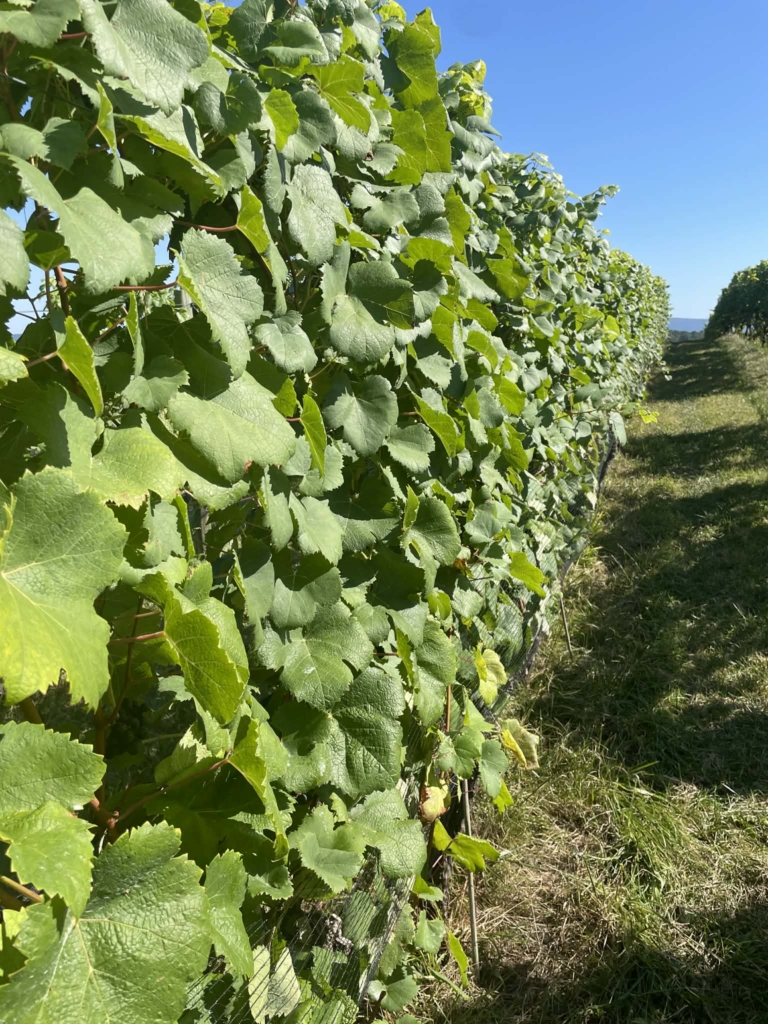
The themes for the 2025 growing season were rain and Spotted Lanternfly. May 2025 saw seven to eight inches of rain across the Loudoun County and Shenandoah County sites, while the same period in 2024 saw three to four inches. June 2025 received five inches across the sites while the previous year had less than an inch. And July 2025 registered five inches compared to two to three inches the year before. The most conspicuous effect of this rain was the incredible growth and verdancy of the vines. After two years of drought during the growing season, I was happy to see so much rain.
The downside of so much rain is increased fungal disease pressure. We treated the vineyard 23 times between April and October, representing a weekly interval. Despite the disease pressure, the incidence of fungal disease was minimal. In fact, the only disease present was a mild amount of downy mildew on the lateral shoots of Chardonnay. This observation is across four sites – two in Loudoun Co. and two in Shenandoah Co. In trying to account for this, three things come to mind. The first is a phenomenon I don’t normally see in Virginia – dry, windy weather soon after a rain event. This occurred mostly early in the growing season, and it vanished by July. The second was a focused effort to combat downy mildew with fungicides beyond phosphorous acid and Captan/Mancozeb. Specifically, I used Ranman 400SC (cyazofamid) and Zampro (dimethomorph + ametoctradin) with success. This is especially noteworthy considering a history of intense downy mildew pressure at the Loudoun Co. sites. The third thing is a spray volume of 100 gallons per acre. In the past, I would spray all my fungicides at about 35 gallons per acre except when spraying phosphorous acid. But because Ranman requires 100 gallons per acre and because vine growth was so profound (and with the resulting thick canopy), I opted to spray every fungicide at 100 gallons per acre all season long. The difference in how the vines look, especially late into the season when disease pressure has had a chance to set in, is substantial compared to previous seasons.
Also present in excessive numbers this year was SLF (Spotted Lanternfly). In fact, there was a heavy presence of SLF for the entire season. I opted to spray early and often for SLF. I used Actara insecticide (thiamethoxam) with good results early in the season. Actara is not very broad-spectrum and is very effective against SLF. But at the maximum rate, only two sprays can be applied per season. I then sprayed Carbaryl for the rest of the season. All in, I applied two Actara sprays and three Carbaryl sprays. I would normally apply one or two insecticide sprays per season. I do worry about mite flare-ups with more than two Carbaryl sprays. And this season, I did notice minor leaf bronzing (probably mite damage) after the third spray in mid-September at the Sunset Hills Vineyard site in Purcellville. The other three sites did not show any bronzing, though. Even though the insecticide sprays were effective, adult SLF pressure would bounce back within a few days of a spray. Late into the season, after mid-September, was the heaviest SLF pressure, and this was after I had exhausted my ability to spray Actara and Carbaryl. Based on these observations, next year I will delay spraying insecticide until later in the season.
In mid-August, when I had reached the application limits of several fungicides, a miracle happened. Northern Virginia experienced three weeks of dry, sunny weather and unseasonably cool nights. The low temperatures had a substantial effect on retaining acidity in the fruit. The most profound example of this was Shenandoah Valley Tannat harvested on October 5 at pH 3.27 and 26.4° Brix. The rest of the red vinifera cultivars were harvested between pH 3.55 and 3.70. While this seems normal for red vinifera, I typically push for a high level of ripeness and harvest around pH 3.90 to pH 4.00. It’s easy to lose sight of how much acidity is lost with nighttime grapevine respiration. Our regional climate suffers from warm nights, resulting in the grapevine maintaining its metabolic processes, including the degradation of malic acid. When making a harvest decision on acidity, low fruit acid can force the decision to pick at the expense of other (and perhaps more important) parameters of ripeness.
Harvest weights came in lower, by about 20%. Most of this can be attributed to very low yields with Chardonnay, likely due to rain during flowering. The red cultivars fared much better with no loss compared to the previous two vintages. Fruit and wine quality is excellent across the board. However, I did experience substantial issues with stuck and sluggish alcoholic and malolactic fermentations.
Regional Report – Central Virginia
Benoit Pineau – Pollak Vineyards
Climate
In the last grape press report, Winter-Spring Edition, we mentioned the heavy rain during the end of bloom. At the time, and after a dry Spring, the rain was welcome. Unfortunately, at that point, we had no idea the rain was here to stay. The month of May brought 12.5 inches of rain (our 15-year average is 4.7’’), and the rain events never stopped until mid July (6.5’’ in June and 8’’ in July). Then, August was our driest month on record (15 years) for Pollak Vineyards; the 2025 weather pattern was a bit radical. Overall, the temperatures were in the normal range for the season.
Physiological stage and related work
In the presence of heavy moisture and normal temperatures, the vines grew extremely fast. All vineyard tasks became necessary but complicated to put in place. The vineyard crew executed numerous passes tucking the shoots in the wires. Our leaf pull strategy became more aggressive than usual to decrease the humidity level and fungal pressure around the clusters. Hedging and mowing became almost a routine activity. Nebbiolo took off and, as usual, was the first to get a cut shortly after bloom for a final count of 6 hedging passes. The spraying windows were short and complicated to put in place due to the high frequency of the rain events and the water-saturated grounds. Our new planting vines grew extremely well, but so did the weeds; the under row weed management needed unusually extensive passes. In continuation to our vineyards restructure, we completed phase 1 by planting 32 acres in our new “Windcrest site.” And we started phase 2, post-harvest, at our winery site by pulling 14 acres of old virus-infected vines.
Fungal-Viral Pressure
The downy mildew pressure was present but not unusual compared to previous vintages. The surprise came from black rot. The black rot pressure was very high early to mid-June and remained a threat at veraison; this was a first for us at Pollak Vineyards. We found the first sign of black rot on berries in early June mainly but not only on Sauvignon Blanc, Nebbiolo, and Chardonnay. We had no choice but to spray a tebuconazol product to eradicate the infection in early July. Following the infection, we performed a few passes to remove the infected berries in the tight cluster varietals (like Sauvignon Blanc, Nebbiolo). This is to avoid a full cluster rot infection (like botrytis). We believed that the infected berries from the looser cluster (such as Merlot) would fall off naturally. It was encouraging to notice that the numerous cases of Pierce’s Disease diagnosed 2 years ago seem to have disappeared. We suspect the cold winter temperatures have eradicated the bacterium.
Insect Pressure
The Japanese beetles were almost non-existent in the vineyards this year. This didn’t spare us from having to use insecticides due to the heavy populations of Spotted Lanternfly. We were watching and learning about the new pest; it appears that the lantern flies prefer the tender shoots varieties (like Petit Verdot, Merlot) to the harder tissues (like the Cabernets). Late in the season, it was easy to report the blocks with the most pressure; the top of the canopy turned red for the red varieties as a response to the scarring tissues. It is unclear at this point how the vines will respond to this damage next year. We quickly understood the importance of using a systemic insecticide in this new pest management control because of the swarming population. Some neighboring vineyards were challenged by mites, probably due to the high frequency of the insecticide products. Also, we notice the increased presence of the stink bug compared to the previous year; perhaps the predator/prey ratio has been off balance since the SLF arrival?
Vintage
Overall, the vintage was “unexpectedly good.” Back in early July, the hope for a decent harvest was nonexistent. We were very pleasantly surprised to bring great quality fruit at harvest. The quantity harvested was lower than the average (10%) due to a multitude of reasons: frost, rain around bloom, black rot, and dry August. In the winery, some lots (mainly later reds and high TA varietals) might have suffered from the expansive earlier rain; high pHs. Also, we should mention several cases of stuck or dragging fermentations (alcoholic and malolactic) that seems to be in relation to high SLF pressure blocks.
Regional Report – Shenandoah Valley
John Kiers – Ox-Eye Vineyards
This vintage seemed like two years in one. The first half was cool and wet. The frequency of rain or drizzle was remarkable for the almost daily occurrence. However, the rainfall totals for us were not too bad. June saw rainfall totals of only a few inches, and July saw barely an inch. The soil was not saturated, and therefore the vines were not overloaded with water.
By mid-July, the showers had subsided. Then things became extremely dry with almost no rain in August. September saw a single rain event near the middle of the month and totaled only about an inch. Temperatures were on the cooler side, with the number of days above 90°F at less than five.
Given the wet first half of the growing season, we expected disease to really take off at some point in the season, but it never did. We had a mild outbreak of powdery mildew in the Lemberger and Chardonnay. I attributed that to my error of poor timing for early sprays in those two varieties. A single spray of oil killed off the mildew. Both varieties had lighter-than-average crop loads due to very poor flowering conditions in April. The remainder of the vineyard produced relatively average yields. Hedging was mostly a single pass due to the dry soil, except for the Chardonnay and Lemberger. They required two passes due to excessive growth on vines with minimal fruit.
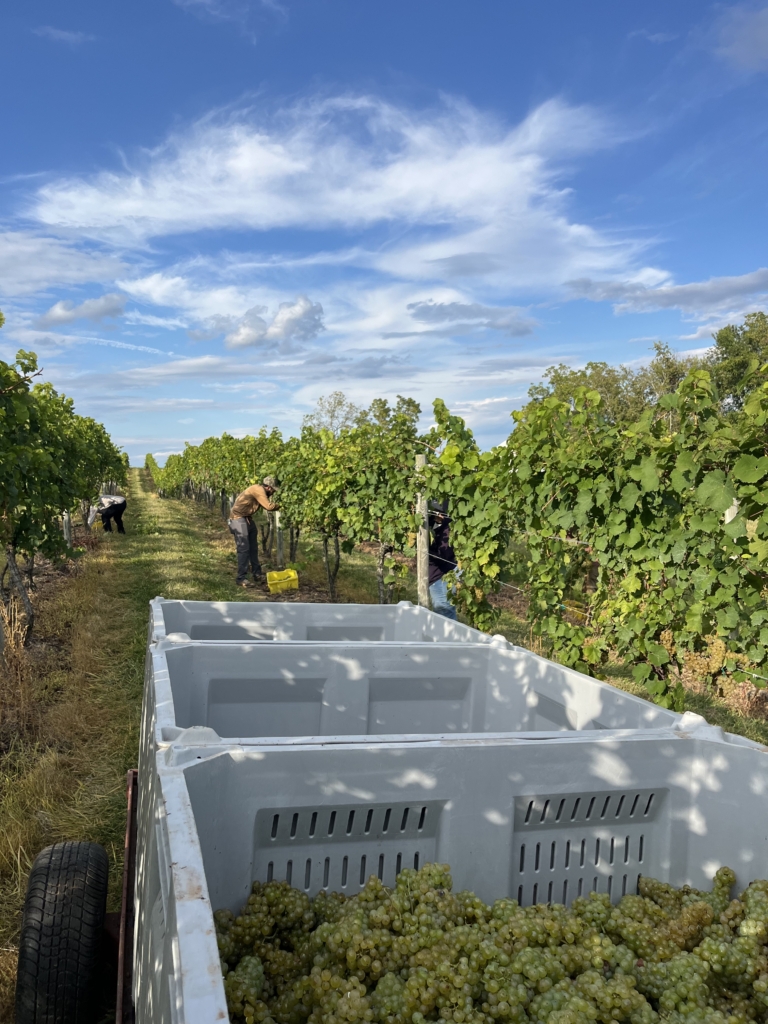
Harvest came a little earlier than normal for most varieties except for Cabernet Franc which seemed to slow down perhaps due to extreme dryness. Cabernet Franc is usually the last fruit that we pick. Fruit chemistry was good with plenty of sugar, excellent berry size, and reasonable pH’s. Again, the Cabernet Franc was the exception with a pH of 3.85 at harvest versus a historical average of 3.5 to 3.6 over the last 25 years.
Any discussion of this vintage would be incomplete without the mention of the Spotted Lanternfly. We saw the first adult around the second week of August. By the end of August, the number of SLF was shocking. We sprayed for them every 10 days through post-harvest, when they finally seemed to subside. They were most populous on the western/high side of the vineyard blocks, with almost none on the eastern or lower side. Most of our spraying was focused on these higher areas.
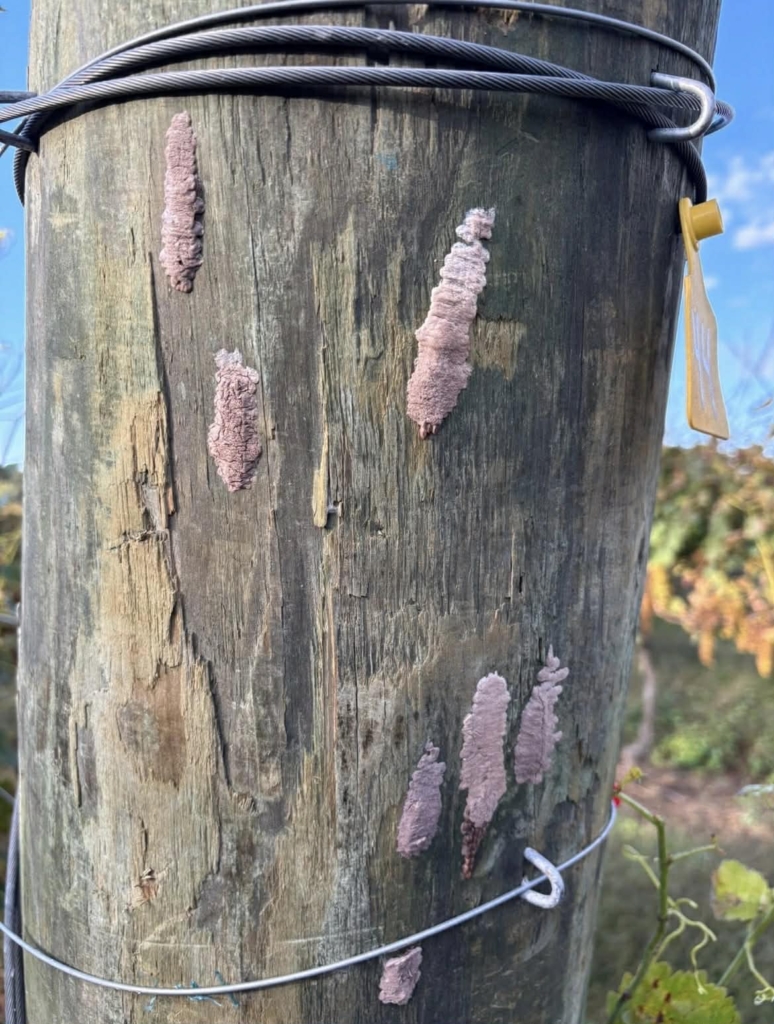
Our general unscientific observations about this new bug are that they are inept fliers and easy targets for predators. We also saw Yellowjackets attack SLF and kill them in large numbers. Barn swallows seemed to like them, but unfortunately, the swallows usually migrate away in late August and early September. Other than grapevines, we saw large numbers of SLF on maple trees and Virginia Creeper. Their egg masses are mostly on vineyard posts and almost always on the southern side of the post. Milkweed is supposedly poisonous and attracts the pest, but we didn’t notice any accumulation of dead flies around the plant. We are scouting for egg masses and destroying them in hopes of reducing next season’s population.
Regional Report – Southern Region
Kevin Sutherland – Nicewonder Farm & Vineyards
A Season of Extremes and Exceptional Quality
The 2025 growing season at Nicewonder Vineyards will undoubtedly be remembered as a vintage of dramatic contrasts.
The Weather Story: A Warm, Wet Start, with a Dry Finish
The season was defined by two primary records: it was the third warmest and the second wettest. This combination of high heat units and abundant precipitation created a growing environment that demanded constant vigilance from the vineyard team.
The early-to-mid season was a relentless barrage of warmth and humidity. This weather pattern, while accelerating vine growth, was also the driving force behind a significant elevation in Downy Mildew pressure. The heavy, frequent rains throughout the spring and early summer necessitated a robust and proactive management program to maintain canopy health and protect developing clusters. This initial phase was a true test of our timing and material efficacy, and our ability to manage the canopy proved instrumental in preventing widespread infection.
The season’s saving grace arrived abruptly at the end of August. As if a switch had been flipped, the weather turned markedly dry and clear. This extended period of high-pressure, rain-free conditions persisted through the crucial ripening windows of September and October. The effect on the vineyard was transformative – no fungicide sprays were required in either of the final two months of the season, a rare and welcome respite. This dry, sunny finish provided ideal conditions for the fruit to reach full phenolic maturity without the threat of late-season rot or disease, ensuring clean, high-quality grapes at harvest.
Pest and Disease Management: A Tale of Two Pressures
Disease pressure, as noted, was acute for Downy Mildew early on. Our success in mitigating this chronic threat is a testament to the crew’s dedication. However, in stark contrast, insect pressure was extremely light for much of the season.
The perennial threat of Japanese Beetles barely materialized, requiring only a single, well-timed spray application. This minimal insecticide use is a positive development for both environmental sustainability and beneficial insect populations in the vineyard. Furthermore, Nicewonder remains incredibly fortunate in that we have not yet observed any Spotted Lanternfly (SLF) in the vineyard. As SLF continues its invasive spread across the Mid-Atlantic, this absence is a major boon, and we remain hyper-vigilant with scouting and monitoring protocols.
Tonnage vs. Quality: The Trade-Off
The ultimate downside of the 2025 season was a reduction in yield. Tonnage was down on our Viognier, Chardonnay, and Merlot, primarily due to the impact of a significant spring frost event.
Despite this lower yield, the quality of the harvested fruit was outstanding. The warm and dry conditions in September and October allowed for optimal ripening. Sugars were universally elevated, indicating excellent physiological maturity and flavor concentration. Crucially, a good balance was achieved between heat and moisture, especially in the late-season diurnal shifts, which resulted in good acid retention across all varieties. This high concentration, coupled with balanced acidity, promises wines with great structure, depth, and aging potential.
A Curious Observation on the Crush Pad
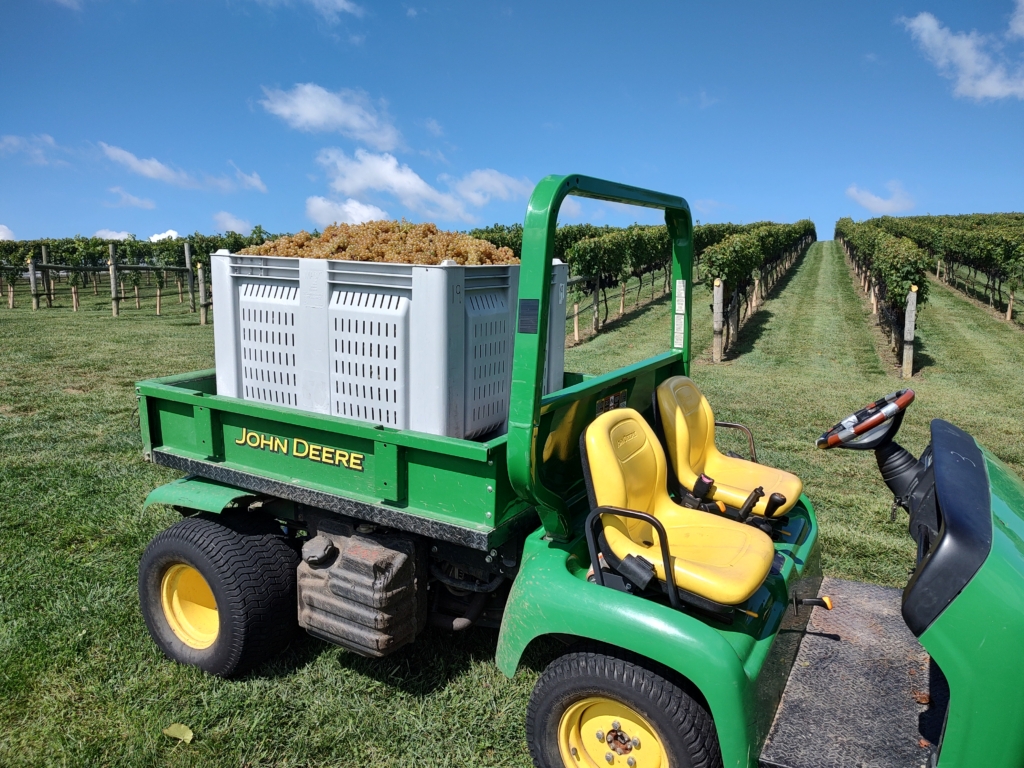
On a lighter, and somewhat peculiar, note, the 2025 harvest and crush process was marked by a distinct lack of the usual buzzing nuisance: there were no Yellow Jackets observed in the vineyard or on the crush pad for the entire harvest. While their absence certainly made for a more pleasant and uninterrupted picking and processing experience, the reasons for this dramatic drop in population remain a mystery. It is a minor observation but a very welcome change in the typical dynamics of the harvest season.
In conclusion, the 2025 vintage at Nicewonder Vineyards was a formidable challenge that ultimately finished strong. The early-season moisture created hurdles that were successfully managed, and the late-season dry conditions provided the perfect final act for ripening. While the spring frost reduced the volume, the intensity and balance of the fruit suggest that this will be a standout vintage for quality, showcasing the resilience of the vineyard and the skill of the team in adapting to a year of climatic extremes.
Eastern Virginia Regional Report
Gonzalo Ortiz – Rustic Vintage
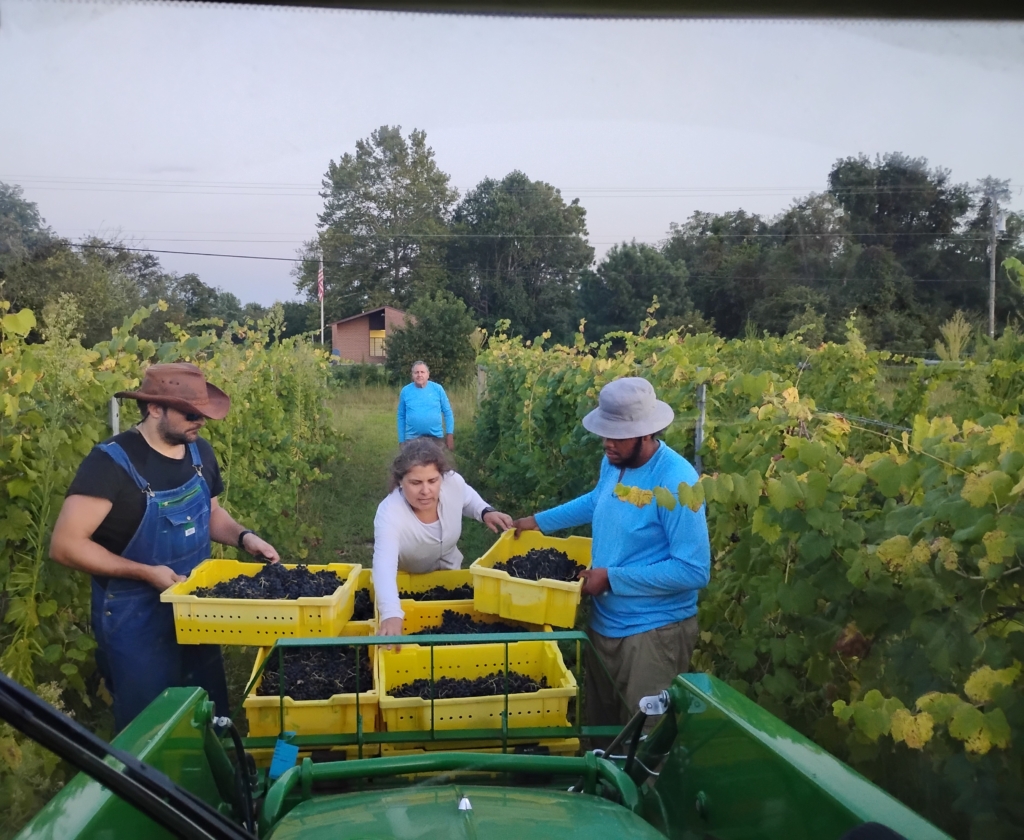
Here in the beautiful Northern Neck of Virginia, the second part of the growing season was drier than the first half of the season. Disease pressure for me was low. Downy mildew and sharpshooters (Pierce’s Disease) are my major pest threats here.
With the potential upcoming changes to Captan and Mancozeb containing labels, I have continued my research on effective replacements available for the industry, leaning heavily on presentations and literature coming from Dr. Mizuho Nita (Virginia Tech) and Dr. Katie Gold (Cornell). If those two names are new to anyone reading this, I would suggest diving deep into their publications. Being in the audience of vineyard-specific extension presentations consistently since the nineteen nineties, I expect that fungicide resistance issues will speed up in vulnerable East Coast vinifera vineyards as the chorus of slowing fungicide resistance of systemic fungicide products by tank mixing with multi-site protectants has been advocated since I started. With the potential loss of these protectants, I have continued my research of alternative non systemic and less prone to resistance fungicide protectants. Having seen changes to sulfur labels in 2025 that I would not have expected before, it will be interesting to see if Copper products follow.
While our site is still maturing, the harvest season from early-pick white grapes to late-harvest reds is approximately the last week of July to the first week of September. During this time this year, the rain events that we did have were spread out by a couple of weeks. With well-draining, low clay content, sandy loam soils, coupled with having most days with high temperature still in the low to mid eighties for those six weeks, the soil dried out quick. This year, we had our first little harvest, which to me felt like a homecoming.
Having limited space and just starting out I sent out to multiple labs this year for my chemistry.
Trial blocks of Paseante Noir were sensitive to downy as the literature states, but were okay. Comparing my one-year trial with what I saw at the Winchester AREC this summer, it seems it will be by far the most sensitive to downy of anything else I have on our farm. The Cabernet Sauvignon clone 169 trial I put in to see cluster morphology and chemistries here is still too small in the second year, so nothing yet to gauge. I got to see my first clusters of Tannat on site this year. One year is not much, but seeing its skins and cluster makeup, I would put it in the same bucket that I see Nebbiolo, Sauvignon Blanc, and Barbera, which is that it can be done and done at a high level, but needs a lot of passes (labor) to do right, and the proper site to have a premium product. I was very impressed with the Malbec clusters on clone 11. The berries were much smaller than the berries of Malbec clones I have worked with in the past, so I will be very interested to see if that is a characteristic of that clone on this soil or if it was a result of the lack of rainfall in the second half of the year, when comparing with next year. If ultimately that clone remains to show smaller berries here and consistently shows itself the way it did this year. I could see planting an acre or two to fill a 500 or 600 gallon tank. Enough to celebrate good vintages and yet not enough to be crushed if grapevine yellows shows itself, as I have seen more Malbec with grapevine yellows than without in my career. Merlot did not crop this year enough for a harvest, but what I saw on the typical 181 clone was exciting. Contrary to my expectation, Merlot berries maintained more turgor than Petit Verdot going into the harvest period. But next year will show if that was because of the locations where they are planted or simply because the Merlot had a minimal crop compared to the Petit Verdot. I only ran Brix numbers on these trials this year and did so once just to have a baseline of comparison for the future. As someone who spent most of his career picking Chardonnay in the second week of September, these numbers are of note while just being a one year snapshot on young plants. August 22, 2025 Merlot 21.0 Brix, Tannat 19.6 Brix and Malbec 19.0 Brix.
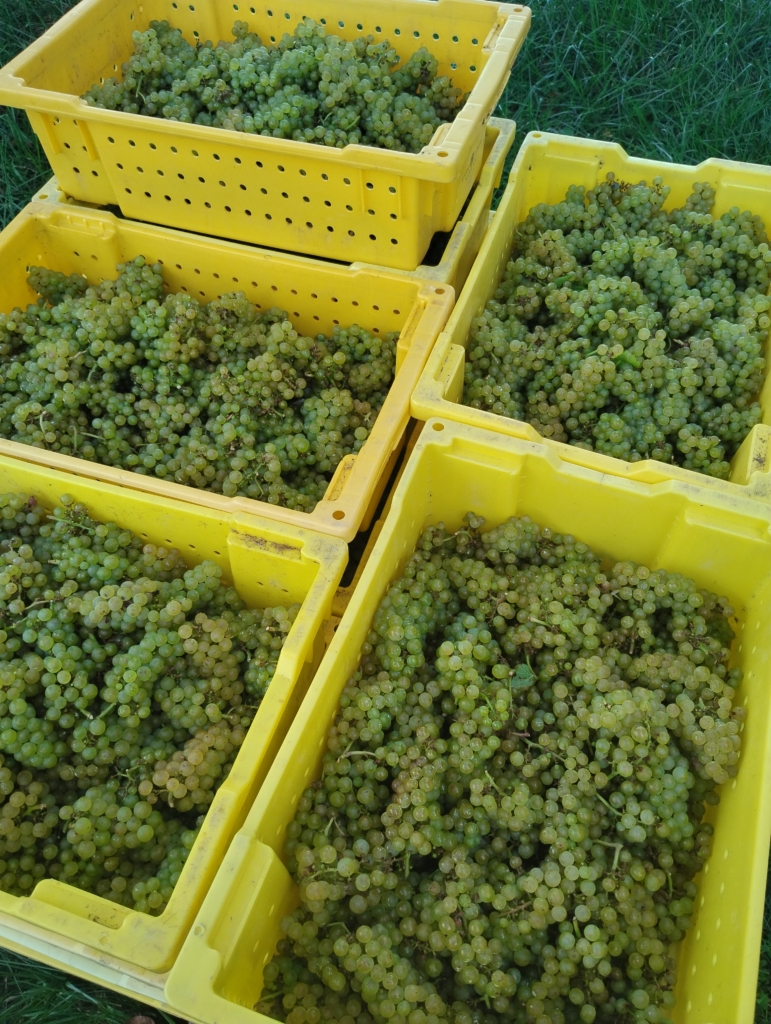
Producing vines on site, while tiny, were Chardonnay and Petit Verdot. I love Chardonnay Dijon Clones. On site, we have Chardonnay clone 76, and for those that haven’t worked with it before, the clusters are about fist size but not overly tight. So, as a grower, you don’t have as much weight per area compared to other Chardonnay clones, but the trade-off is these clones maintain good acidity and produce fine wines with the typical spread of winemaker styles available, depending on pick decisions. Like any other Chardonnay clones, you must be mindful not to get powdery, but once you get that task, it is much more straightforward than the larger and tighter clones that are more susceptible to botrytis and sour rot. Chardonnay picked the first week of August with: 20.0 Brix, pH 3.41, and resulted in 7.5 g/L Titratable Acidity. Petit Verdot was harvested on August 28 and into the first week of September with the help of my father, siblings, and nephew. These sandy soils dry quickly that dehydration was apparent into the first week of September. Brix samples were 21.2 on August 22 waited about a week, then started to pick once some samples were 25.0 Brix by hydrometer, and the lab got 25.0 Brix, pH 3.73, and TA was 6.7 g/L. The difference in a week was noticeable; there was noticeable dehydration, but thankfully, that happened once it was already ripe. No noticeable green tannins, etc. It rained a couple of times post-harvest, and I gave the vineyard a supplemental nitrogen via strip to regroup, and it is remarkable how the plants greened back up from what looked like senescence.
Post-harvest showed good lignification across the board. On the farm, we have continued putting up posts, and I have started pruning at night whenever I can. Our first ground frost was earlier than the last couple of years by about three weeks on October 24th. I hope everyone has a good start to pruning season!