
Written and edited by Jess Trapeni
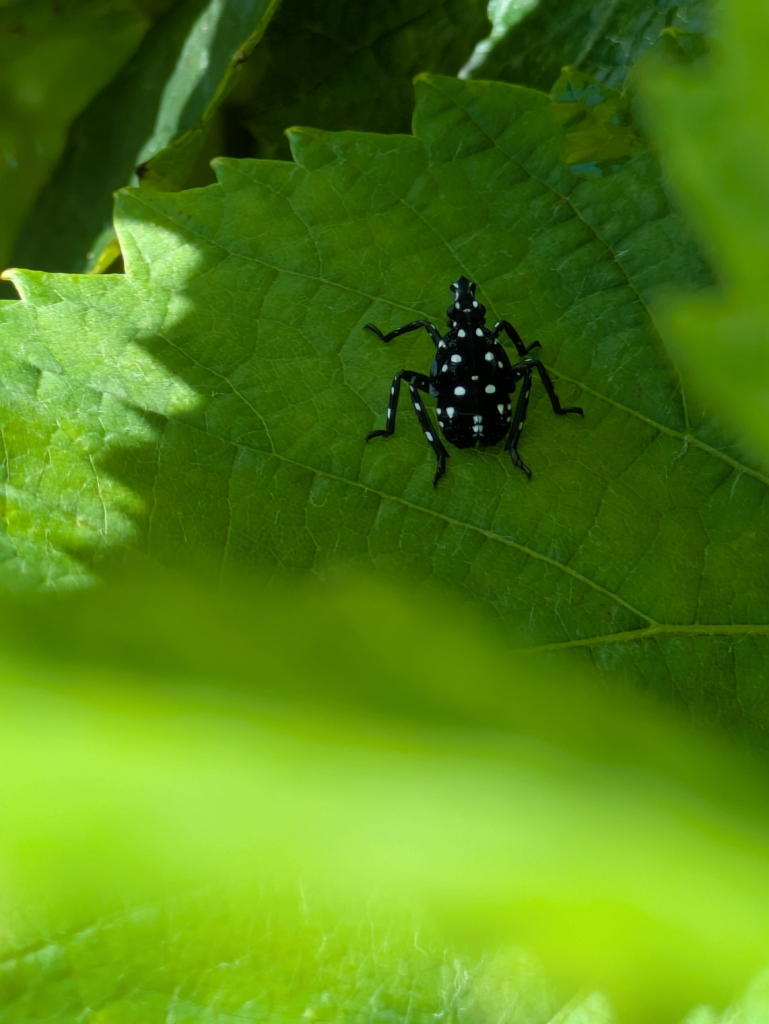
As the Spotted Lanternfly (SLF) continues to expand its reach in Virginia vineyards, I wanted to share insights from a Pennsylvania grower who has spent the last five years actively managing this invasive pest and pass along some valuable lessons he has learned.
When the SLF first showed up at Waltz Vineyards in Pennsylvania in 2020, Zach Waltz didn’t think much of it. He’d been following Penn State’s research and hearing industry chatter so he knew the threat from the SLF was growing but he recalls still being surprised at how quickly the population exploded. The first year was just a handful across all their vineyards and the following year they were overwhelmed.
Waltz responded early and aggressively. One of his key moves was investing in a specialized mist sprayer, typically used in almond orchards. It could reach high into the surrounding trees, targeting the places the lanternflies feed before descending into the vines. “That was really pivotal for us,” he says. “We could go in and target blocks of Tree of Heaven, where they congregate, without having to spray acres of woodland. It was very targeted.”
Alongside mist spraying, his team began managing Tree of Heaven on his properties using basil injections. They found this strategy to be very effective but costly, and have since switched to basil sprays using Safari, a treatment that is “just as effective and more affordable”. Through these methods, they have managed to slow the influx of SLF into the vineyard.
Even with proactive strategies, the first few years were labor-intensive. Following guidance on spraying when SLF populations hit certain numbers, he found himself having to do perimeter sprays sometimes as frequently as every three days during September and October. Timing sprays around harvest made management even trickier. Surprisingly, though, the added cost wasn’t as high as expected. “We’re already managing fruit flies that time of year, and the same materials work on lanternfly,” he explains.
Now, five years in, things have settled into a new rhythm and their vineyard management has adapted. “They’re definitely not going anywhere,” says Waltz, “It’s just another pest we have to deal with every year”. His current approach includes an early-season spray that overlaps with Japanese beetle control and end-of-season sprays that coincide with the management of fruit flies.
Waltz advises new growers to take those early years seriously. “Populations can explode and decimate a vineyard in just a year or two,” he warns. He’s noticed that young vines and older vines with trunk damage are especially susceptible. “You’ve got to keep a close eye on those.”
When asked about the community involvement, Waltz said local homeowners have been a real asset in managing Spotted Lanternfly. Since the pests are such a nuisance to people trying to enjoy outdoor time, many are willing to treat for SLF and tree of heaven to help reduce the population. Waltz has led an effort to educate neighbors on the yearly application of root drenches or bark sprays. He believes these targeted methods make a bigger difference and have less environmental impact than broad-spectrum spraying.
Looking ahead, Waltz is hopeful for more selective and sustainable pest control. He is optimistic for the development of new materials like biologics for managing Spotted Lanternfly while better protecting beneficial insect populations.
For now, the SLF is just another pest on the list, one that demands attention. “There is hope,” says Waltz. “There’s light at the end of the tunnel. You just have to get through those first couple years.”
More Resources: Spotted Lanternfly in Virginia Vineyards VCE